








Introduction
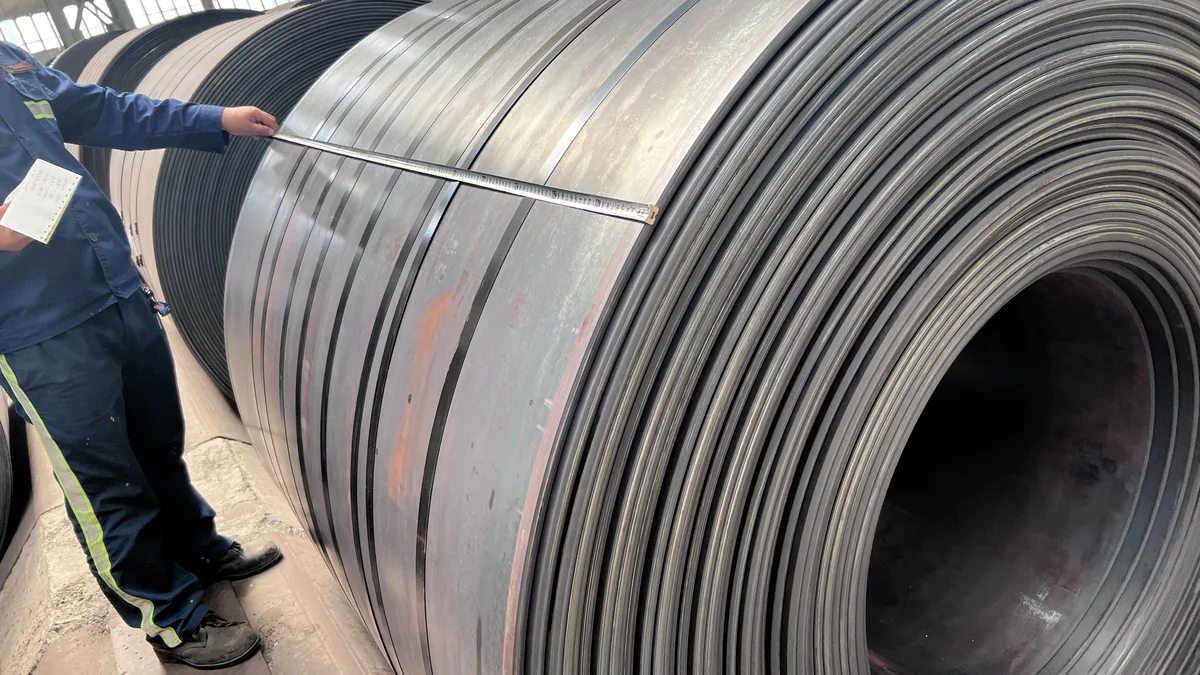
A mill offer that says S355 plate, 12 mm x 1500 x 6000 looks complete until two prices sit in the same spreadsheet. One mill printed S355JR+AR. Another printed S355J2+N. A third wrote S355 and left Charpy and delivery blank. Thickness can match. Yield class can match. The toughness package and the rolling route still differ.
This is a specification freeze list for importers who buy carbon structural plate from China against EN 10025-2 drawings. It is procurement guidance, not a substitute for the ordered edition of EN 10025-2, EN 10025-1, or EN 10029. Grade pages for S275JR carbon steel plate and S355 carbon steel plate help frame the strength class. They do not freeze the impact letter. Ultrasonic class stays in the EN 10160 plate UT RFQ guide. Come back here when the mill fills JR, J0, J2, +AR, +N, or +M after the bid is already compared.
What An Incomplete EN 10025-2 Grade String Leaves Open
EN 10025-2 names non-alloy structural steels with a yield class and an option letter. S235, S275, and S355 are strength families. The letter after the number is a toughness option. The suffix after the letter is a delivery condition. Writing only S355 leaves both fields commercial.
| Field left blank | What the mill can still choose | Why the quote is not comparable |
|---|---|---|
| Impact letter | JR, J0, J2, or no Charpy row | Test temperature and energy stay open |
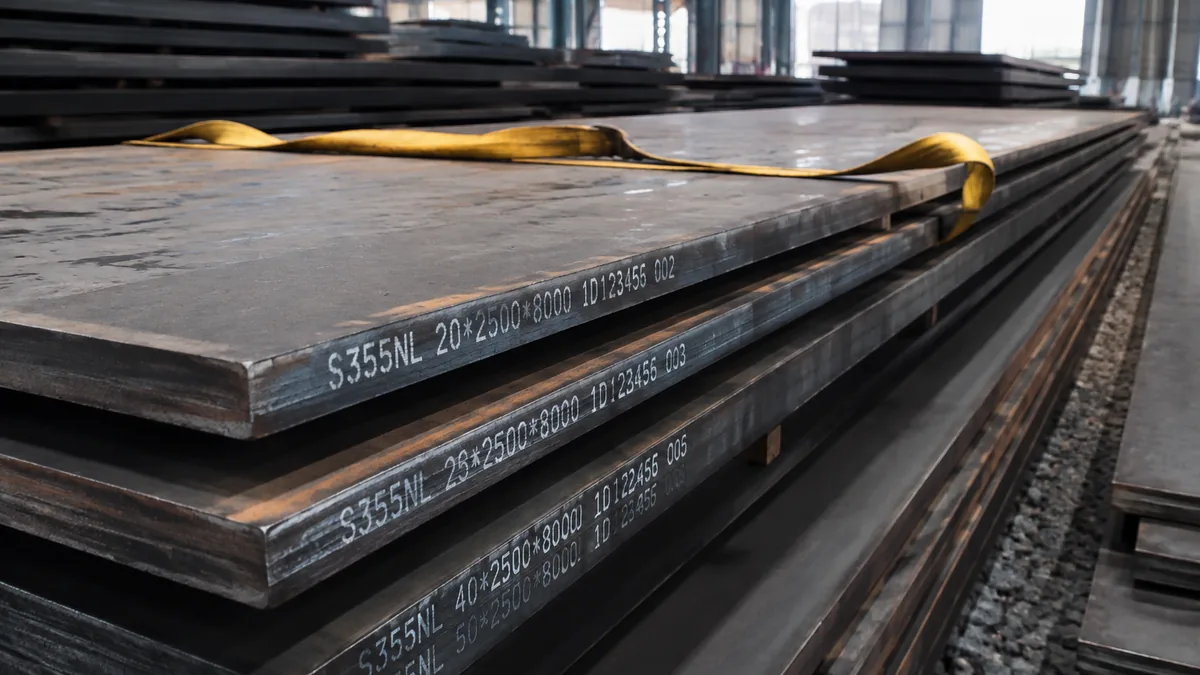
| Delivery condition | +AR, +N, +M, or mill stock as-rolled | Grain route and through-thickness behavior change |
| Thickness band | Yield and chemistry step with thickness | A 12 mm number is not a 40 mm number |
| CEV / deoxidation | Mill practice inside the standard maxima | Weld procedure and HAZ risk move |
| Certificate string | S355, S355JR, or S355J2+N | Claims after cutting have nothing to match |
| Dimensional standard | EN 10029 class A/B or mill commercial | Thickness tolerance and flatness stay unpriced |
A USD 20 per tonne gap on 12 mm plate is often this missing string, not freight. Buyers see it when they line up two FOB numbers that both say S355.
JR, J0, And J2 Are Test Temperatures, Not Nicknames
JR, J0, and J2 are Charpy V-notch options on the same yield class. They are not mill nicknames for “good toughness.”
Commercial mill talk still treats them as interchangeable stock for 6 mm to 40 mm plate. They are not. JR is the room-temperature option. J0 and J2 are colder options. K2, where a drawing uses it, is a higher-energy option at −20 °C. Confirm the energy and specimen size in the ordered edition. Do not copy brochure Joules into the purchase order.
| Option letter | Charpy temperature buyers freeze | Energy buyers commonly discuss (confirm edition) | What a mill may still ship if the letter is blank |
|---|---|---|---|
| JR | +20 °C | 27 J minimum is the usual commercial reading | Room-temperature stock, or no impact row |
| J0 | 0 °C | 27 J minimum is the usual commercial reading | JR stock offered as “S355 plate” |
| J2 | −20 °C | 27 J minimum is the usual commercial reading | JR or J0 against a winter or offshore drawing |
| K2 | −20 °C | 40 J is the usual commercial reading | J2 quoted as if the energy already matches |
Read those Joules as the values buyers still lock when a later lab argues the heat. They are not a heat you already bought. A drawing that says S275J2 is asking for −20 °C. An EN 10204 3.1 MTC that prints S275JR has not done that test.
Do not treat JR, J0, and J2 as 100% identical because tensile sits in the same band. They share a yield class only after the drawing names the temperature.
+AR, +N, And +M Change The Rolling Route
Delivery condition is a separate field from the impact letter.
+AR is as-rolled. Mills often quote it on commodity structural plate because it usually has the lowest processing cost. +N is normalized or normalized rolled. Drawings that need a more uniform grain, or that later cut, form, or weld thicker plate, often name +N. +M is thermomechanically rolled. It shows up on some S355 packages when the mill is selling a controlled rolling route rather than a furnace normalize.
A mill that has S355JR+AR on the floor will offer it against a +N line if the RFQ only wrote S355. Thickness can still be 12 mm. The certificate will not print +N. Fabricators notice later, when distortion, through-thickness ductility, or a weld procedure that assumed normalized plate does not match the heat.
Write the suffix on the same line as the grade. S355J2+N is one product. S355JR+AR is another. Dual-stamping both suffixes on one certificate is a hold, not a convenience.
Chemistry And Yield Still Move With Thickness
Impact letter and delivery condition sit on top of chemistry and mechanicals that already step with thickness. A 12 mm quote is not a 40 mm quote.
Typical EN 10025-2 maxima that buyers still freeze when a lab later debates the melt (confirm the ordered edition; do not treat these as the heat you already bought):
| Grade family | C % max, thinner plate (typical table) | Mn % max | P % max | S % max | Yield class buyers discuss at t ≤ 16 mm |
|---|---|---|---|---|---|
| S235JR | 0.17 | 1.40 | 0.035 | 0.035 | 235 MPa |
| S275JR | 0.21 | 1.50 | 0.035 | 0.035 | 275 MPa |
| S355JR | 0.24 | 1.60 | 0.035 | 0.035 | 355 MPa |
Tensile bands commonly discussed for the thinner product are about 360-510 MPa for S235, 410-560 MPa for S275, and 470-630 MPa for S355. Yield drops as thickness rises: S355 is often read as 355 MPa at t ≤ 16 mm, 345 MPa at 16 mm to 40 mm, and 335 MPa at 40 mm to 63 mm. Confirm those steps in the ordered edition. CEV maxima also step with grade and thickness; freeze CEV on the RFQ when the weld procedure needs it, rather than assuming the mill will print a useful number.
A36 carbon steel plate is a different specification home. Matching a 250 MPa yield story to S235 or S275 does not convert JR, J0, or +N. If the drawing is ASTM, stay on ASTM. If the drawing is EN 10025-2, freeze the EN string.
How The Missing Letter Shows Up On The MTC And At The Yard
The first warning is rarely a cracked sample. It is a short grade string on a 12 mm plate.
Floor pattern: the PI writes S355, 12 x 1500 x 6000, mill edge, UT later. The bundle tag writes S355JR+AR. The Charpy column on the MTC is blank, or it reads +20 °C. The drawing needed J2 and +N. Paint or primer may already be on the surface. The claim then argues rust, because rust is what the buyer photographed.
Check this before anyone books painting, cutting, or stuffing.
- Offer grade chain versus PO grade chain. S355JR+AR is not S355J2+N. S275JR is not S275J0.
- MTC mechanical table: yield, tensile, elongation, Charpy temperature and Joules, and the standard printed in the header. A zinc-free carbon plate still needs the impact row when JR, J0, or J2 was ordered.
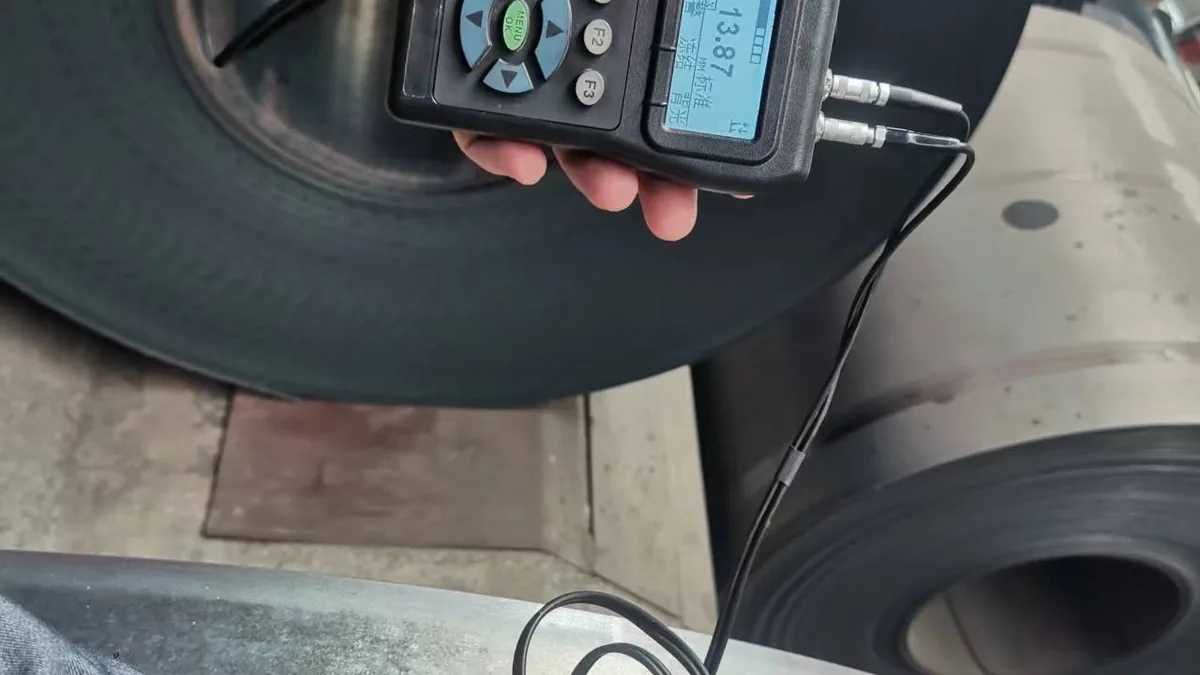
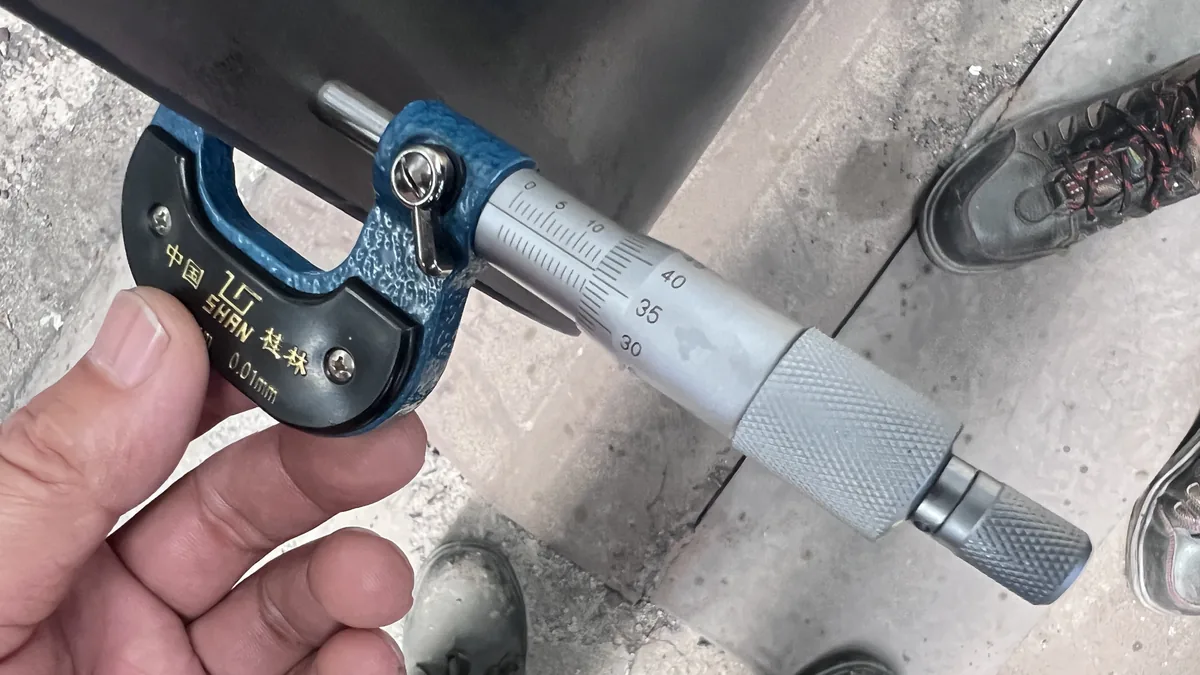
- Thickness basis. 12 mm on EN 10029 Class A is not the same commercial band as mill “±0.3 mm” talk. Write the class.
- Bundle identity versus heat number. One heat can feed JR and J2 only if the mill actually tested the colder option on that heat.
- Packing that still belongs to the same hold: VCI paper or wrap on machined or blasted surfaces, waterproof film, edge protectors, and steel strapping. Plate bundles for a 20GP still land near 25-27 MT. Overfilling a hard J2 bundle to chase that number does not fix a missing letter.
Third-party PSI that only checks thickness, width, and rust will miss this. Tell SGS, BV, or TUV to read the EN 10204 3.1 grade string and the Charpy row against the PO before the bundle is wrapped.
If the mill says two strings are equivalent because both are S355, ask for the Charpy temperature and the delivery suffix on the same page as yield. Equivalence talk without those numbers is a commercial convenience.
Copy Block For The Plate Purchase Order
Copy this into the carbon plate block. Leave UT, CE marking, and destination extras as their own lines.
- Standard and edition: EN 10025-2, ordered year
- Grade string: S235 / S275 / S355 plus JR, J0, or J2 (or K2 if the drawing uses it)
- Delivery condition: +AR, +N, or +M, not “as rolled if available”
- Product form: plate, not coil nicknames, plus mill edge or trimmed edge
- Thickness x width x length, and the thickness basis (EN 10029 class A or B)
- CEV maximum if the weld procedure names one
- Mechanical table required on EN 10204 3.1 MTC: yield, tensile, elongation, Charpy temperature and Joules
- Heat number on plate / bundle / packing list / MTC
- Packing: VCI where the surface needs it, waterproof wrap, edge guards, steel straps; 20GP payload still near 25-27 MT
- Hold: do not paint, cut, or load if the certificate string does not match the PO
If the project also allows a named Chinese alternate, write that alternate on a second line. Do not let a mill collapse it into one S355 cell. Grade-family substitution is a different article: Q355B vs S355JR. This page only freezes the EN 10025-2 option letters.
Conclusion
On EN 10025-2 carbon plate, the impact letter and the delivery suffix are hold points, the same as thickness. JR is +20 °C. J0 is 0 °C. J2 is −20 °C. +AR is as-rolled. +N is normalized. A mill that fills one of those from leftover stock is not doing you a price favor. Freeze the full grade string on the RFQ, then match that string on the EN 10204 3.1 MTC before the bundle is strapped.
Planning an Order or Need a Technical Verification?
If you are sourcing carbon structural plate to EN 10025-2 S275JR, S355JR, or a J0 / J2 / +N drawing, or you need the mill to confirm the impact letter against the MTO:
- Fast technical quote: Send grade string, delivery condition, thickness x width x length, quantity, and destination via our request a quote form.
- Quality assurance: Every order is backed by genuine EN 10204 3.1 Mill Test Certificates with full heat-lot traceability. Third-party inspections (SGS, BV, TUV) are welcomed.
- WhatsApp: Send the grade, subgrade, delivery condition, dimensions, quantity, and destination to +86 151 5311 2221 for a direct specification review. Include MTC and traceability requirements in the RFQ.